To build an e-commerce website
How it all started
For the 2024 edition, Synesthesia became the main partner of TEDxTorino, the event that promotes the sharing of innovative ideas capable of inspiring the world.
The event was held at the exclusive location of the Teatro Regio in Turin and featured important personalities from the world of entertainment, technology, social media, and the arts, who shared their ideas on the theme of “generative listening.”
The solution
Synesthesia AI team created an interactive storytelling experience for the 2024 TEDx Torino edition through statistical language analysis conducted with the help of Quaerys partners.
The goal of this experiment was to unveil the depth of the speeches delivered that evening, where syntax and semantics were deconstructed using the latest artificial intelligence technologies and real-time data analysis.
This innovative approach transformed communication into a shared experience: the ideas exchanged during the event were reshuffled, influenced, and in turn, influenced the audience itself like a harmonious dialogue – a new story waiting to be discovered.
“Words become numbers, numbers become interactive graphs, and then return as new words”. (Giuseppe Tipaldo, Scientific Director at Quaerys)
Results
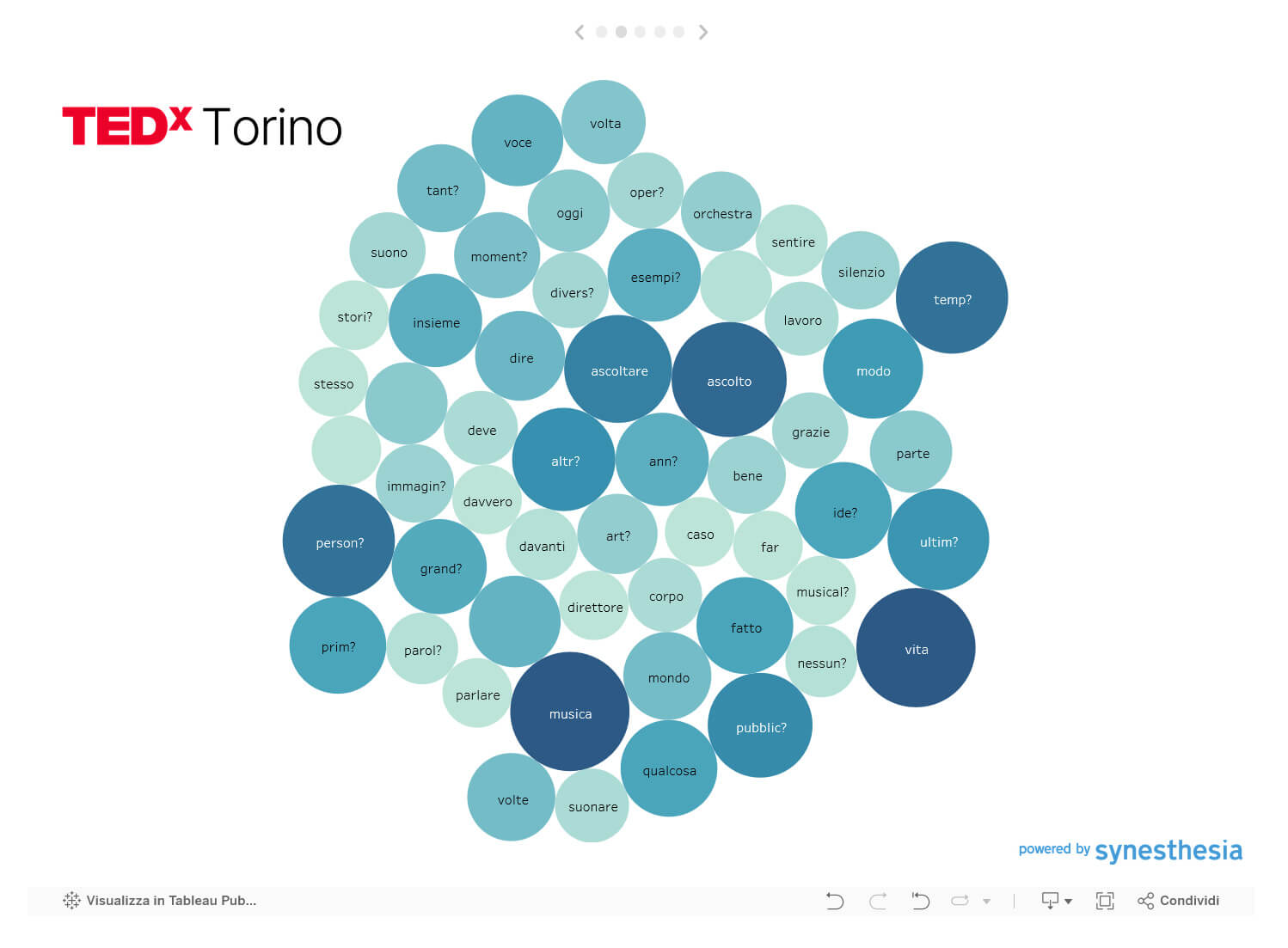
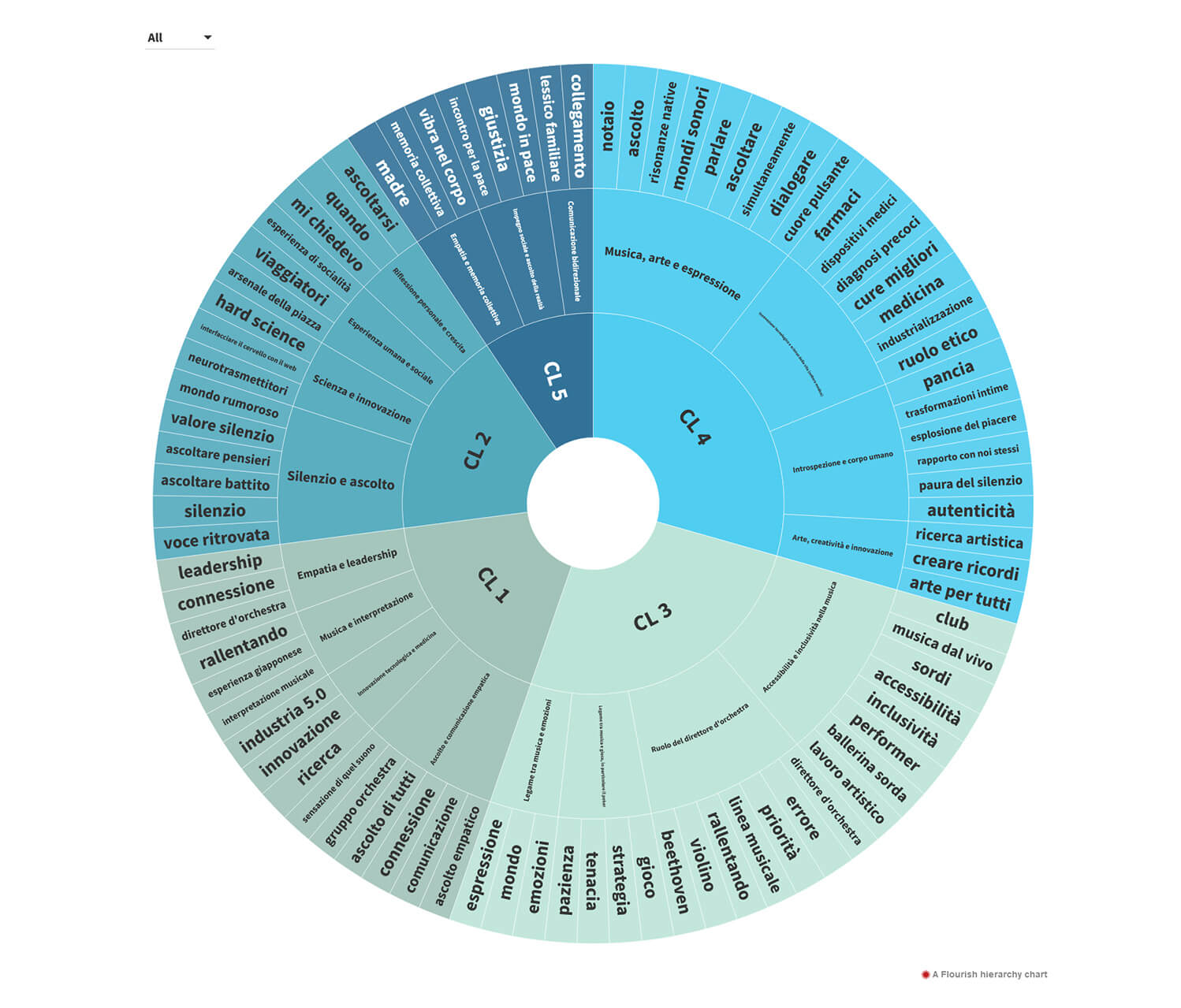
AI tools guided the Synesthesia team in exploring the TEDx Talks, initially revealing the words most frequently associated with them: Listening, Music, Life.
These are the three lexical pillars upon which the meaning of TEDx Torino +UNO rests. Three words, three universes replete with paths and subtle nuances, depending on the human and cultural sensitivity of the reader.
Starting with the calculation of word associations, statistical analysis applied to natural language enabled the extraction of the main topics discussed during the evening. This process of key theme extraction, enhanced by the use of interactive charts, facilitated the identification of the most relevant concepts and dominant trends within the context, making it easier to understand and interpret the collected linguistic data.
As Enrico Gentina (Curator of TEDx Torino since 2016) explained during the event:
“Thanks to our partner Synesthesia, we fed the talks we heard tonight to the artificial intelligence. And what happened? The Synesthesia team trained the AI to read these texts, analyze them, deconstruct them, turn them into data, and then translate them into symbols and drawings”.
To build an e-commerce website
How it all started
With the support of CTE NEXT, the RoboMAG project by Synesthesia (funded by CTE-NEXT) was developed as part of the Call4Testing initiative. In collaboration with the Computer Science Department of the University of Turin and the Fondazione Links, Synesthesia was able to carry out the experimentation with the valuable contribution and availability of Leroy Merlin.
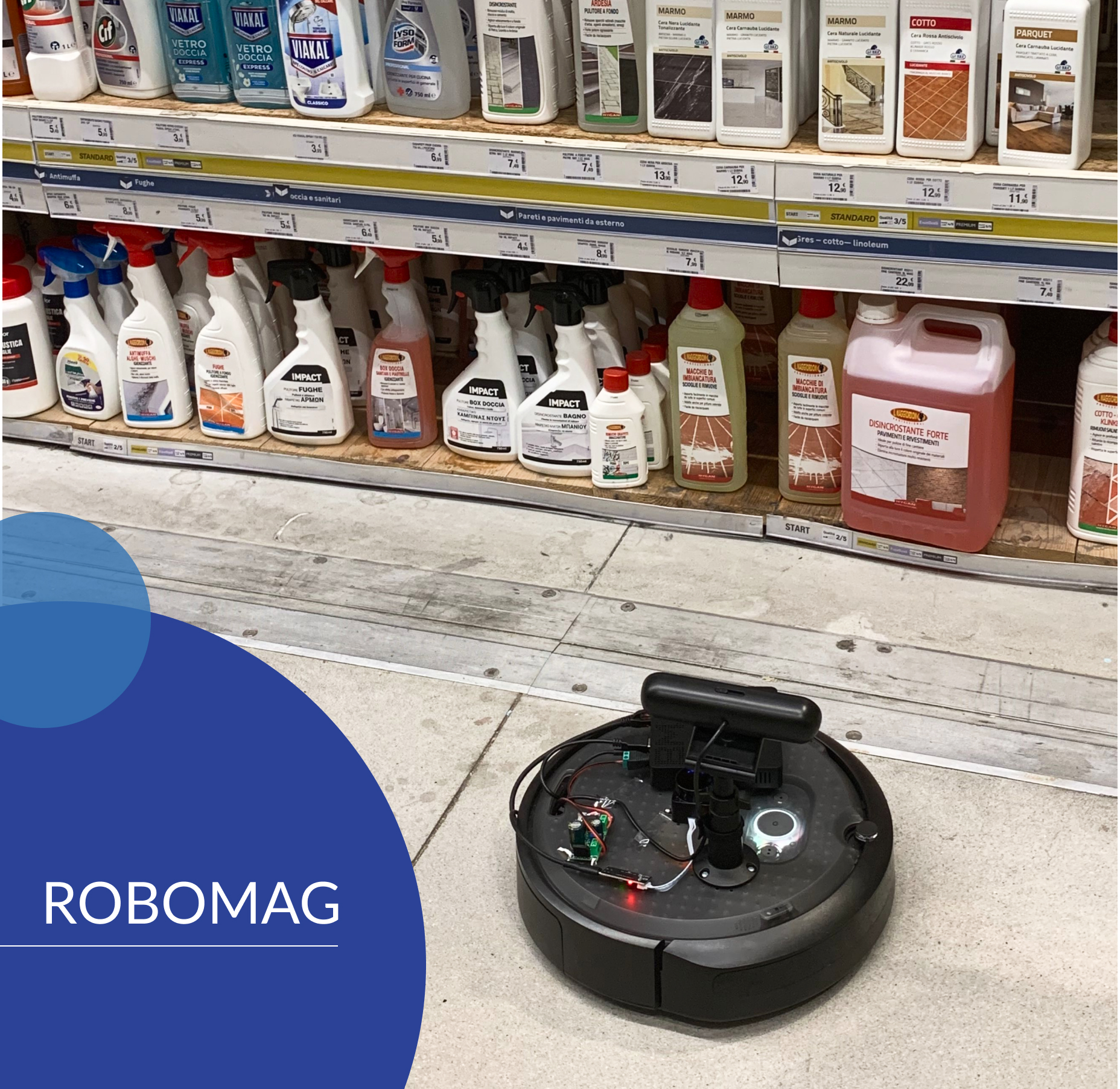
RoboMAG is an innovative and sustainable solution utilising autonomous robots to enhance logistics and delivery management in urban areas. The robots can recognise products on shelves and autonomously coordinate warehouse operations, ensuring greater efficiency and cost reduction. Through Aggregate Programming, the robots coordinate navigation and safety management.
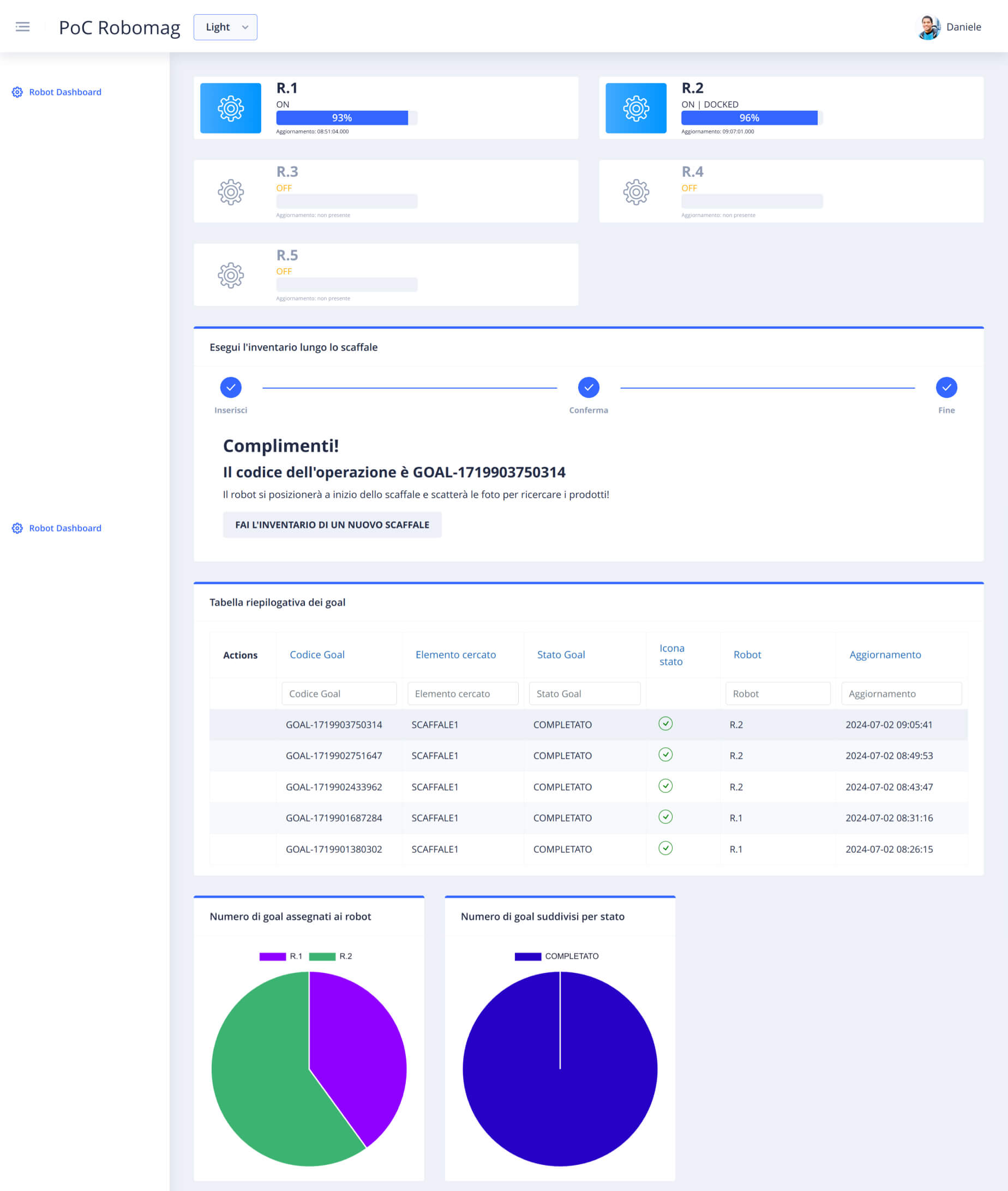
The project was tested at the Leroy Merlin store in Turin to improve warehouse efficiency and inventory management. Autonomous robots equipped with advanced sensors, including lidar and cameras, were used to navigate and identify products on shelves. A physical onboard controller managed robot movements, while the management software used Aggregate Programming to synchronise the robots and communicate with the main controller overseeing operations. A dashboard, developed by the University of Turin’s Computer Science Department, allowed real-time monitoring, and the AI provided precise product recognition. This innovative solution reduced environmental impact, improved safety, and enhanced the efficiency of logistical operations.
The solution
With the integration of 5G connectivity, the robots could exchange real-time information and coordinate efficiently, reducing product handling times.
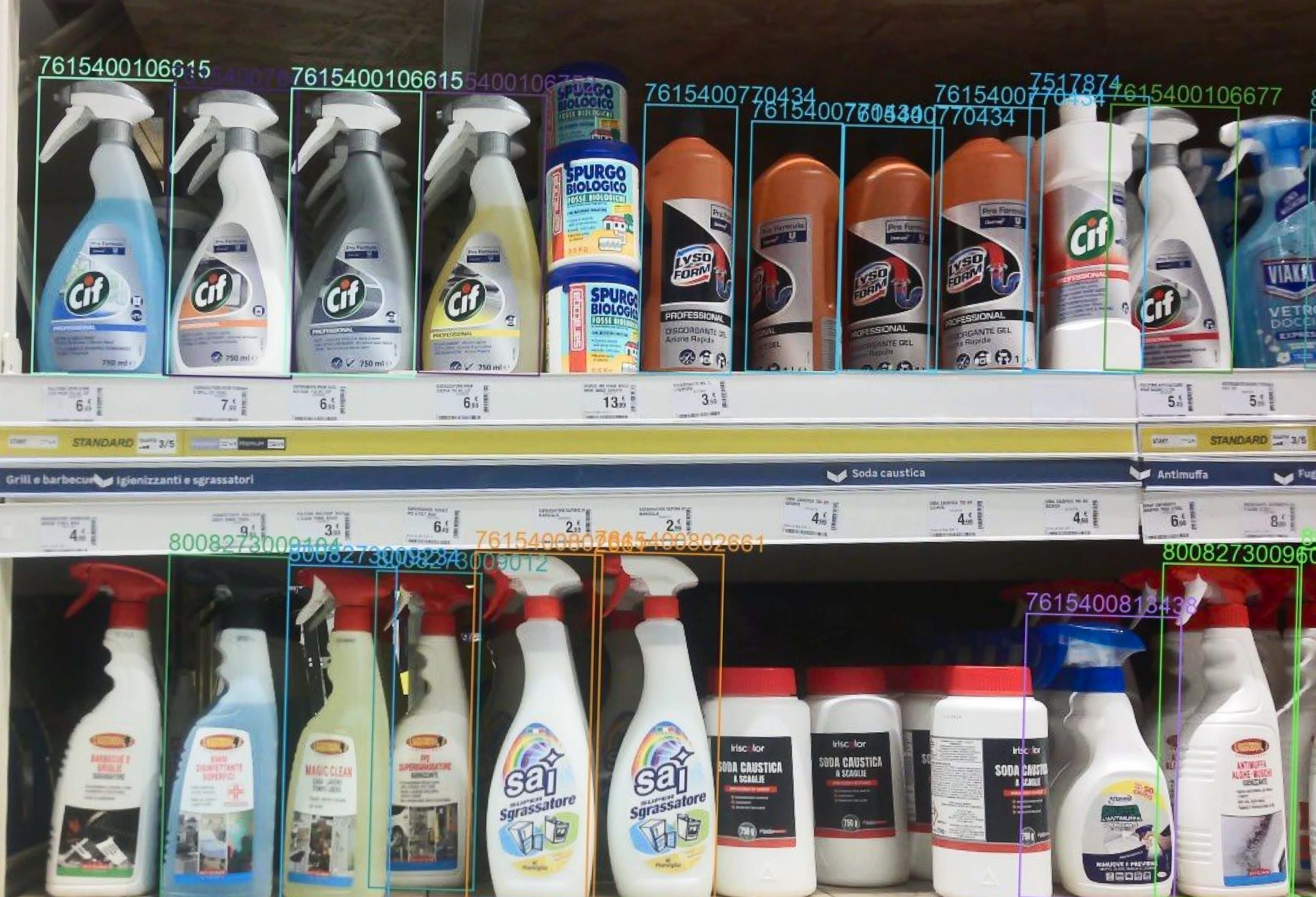
Compared to its earlier version (ROBOBASE), the robots in the RoboMAG project are equipped with a camera enabling a real-time AI-based system for automatic shelf product recognition. Sensors monitor temperature, humidity, and pressure within the warehouse, ensuring proper storage conditions for products on shelves.
Results
The key evaluation metrics for the RoboMAG system are:
- Effectiveness of Aggregate Programming (AP). Measures the accuracy and autonomous coordination of robots during warehouse operations.
- Performance of the 5G Network. Evaluates the speed, latency, and stability of the connection to ensure reliable communication between robots and devices.
- User Experience Quality. Based on operator feedback, this measures ease of use and the effectiveness of VR simulations for training.
- System Robustness. Assesses the system’s ability to adapt to unforeseen situations and its resilience to faults or interruptions.
To date, the robots have successfully passed tests on all four evaluation points.
RoboMAG is a project by


To build an e-commerce website
How it all started
The project was conceived in response to the need to explore and analyse the intersections between medicine, healthcare and sustainability, key issues for the biomedical district of Mirandola.
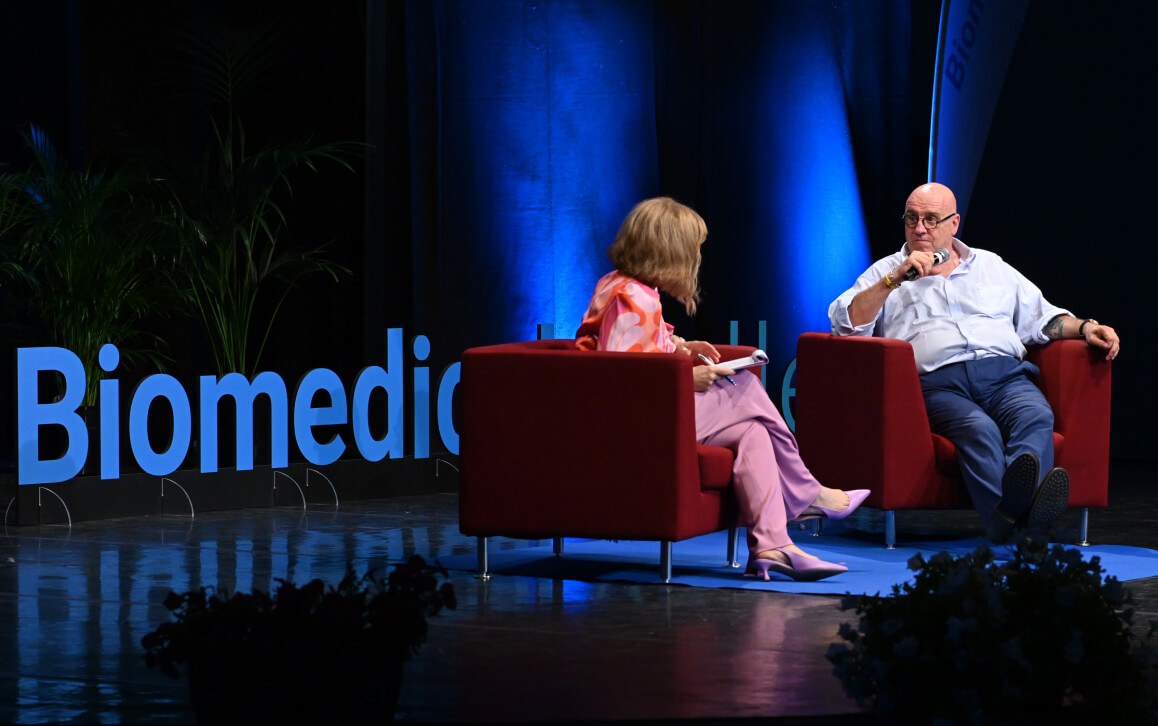
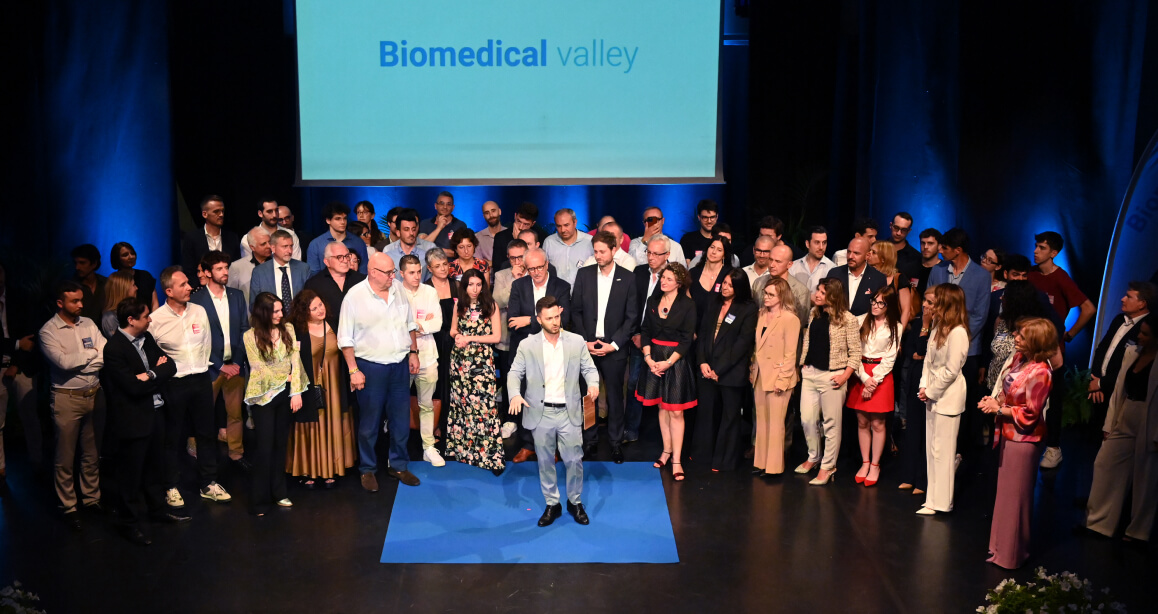
During the ‘Biomedical Valley’ annual meeting, an innovative tool was developed to examine the content of discourse through advanced linguistic analysis. The aim was to identify and understand emerging trends and priorities in the sector, fostering a cross-sector dialogue that could inspire future collaborative and strategic actions within the biomedical district.
The solution
For the 2024 edition of ‘Biomedical Valley’, the annual meeting of Europe’s largest biomedical district in Mirandola (Modena), the Synesthesia Insight team created an interactive narrative. This year’s theme, One Health, was explored through the statistical analysis of language, uncovering the depth of the speeches made during the event. Syntax and semantics were deconstructed using the latest AI technologies and voice data analysis. This innovative approach transformed communication into a shared experience, where insights from the event reshaped the dialogue into a harmonious and dynamic narrative to be discovered.
Synesthesia Insight, an evolution of Quaerys, is Synesthesia’s business unit specialising in Semantic Data Science. With an academic scientific research base and cutting-edge AI and machine learning technologies, it helps companies, agencies, organisations and institutions extract value from digital data. Its proprietary method combines scientific rigour, machine learning and data-driven creativity.
Results
Artificial intelligence technologies applied to human language analysis have made it possible to extract important information from the content shared by companies and speakers on stage. This innovative approach not only deepened the understanding of the topics discussed, but also fostered greater collaboration between the companies in the district, transforming the dialogue into a dynamic and interactive process.
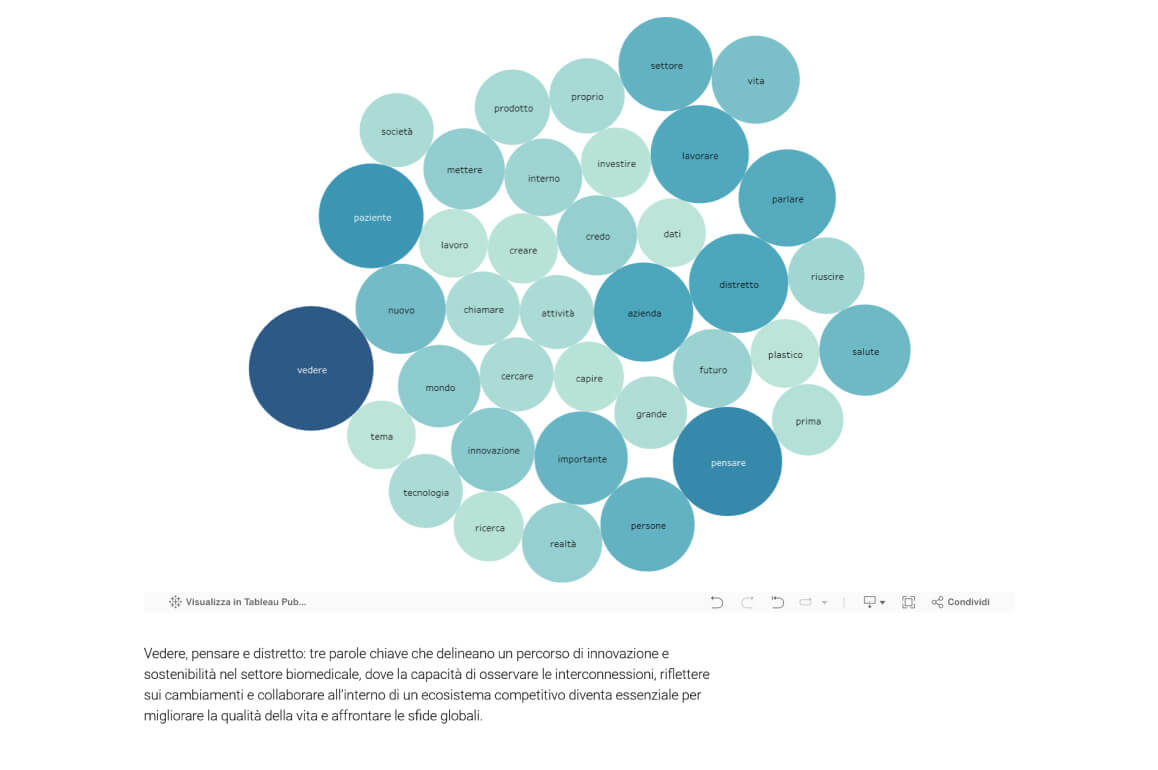
‘Observe, reflect and district’: these three key words outline a path to innovation and sustainability in the biomedical sector. The ability to recognise interconnections, reflect on changes and collaborate within a competitive ecosystem is essential for improving quality of life and addressing global challenges.
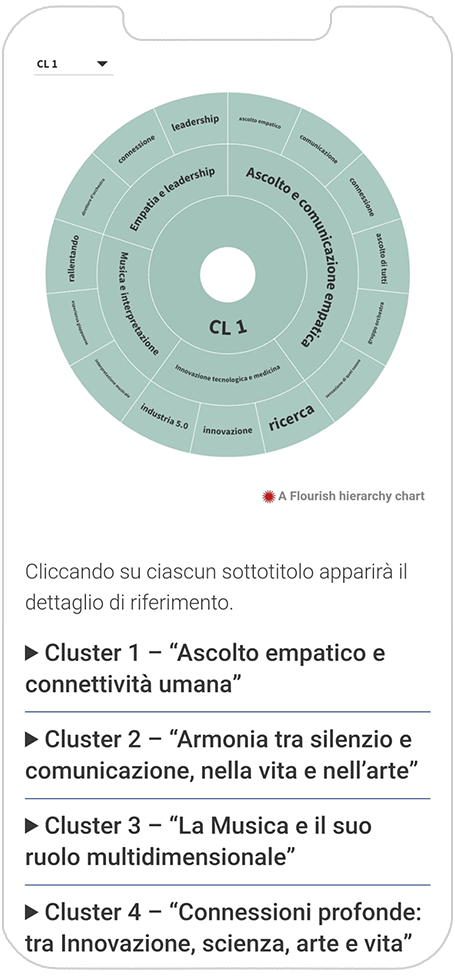
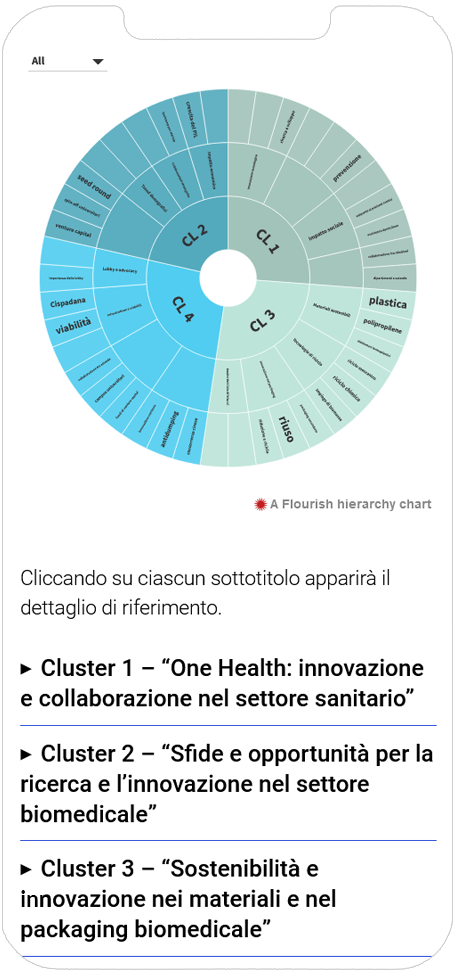
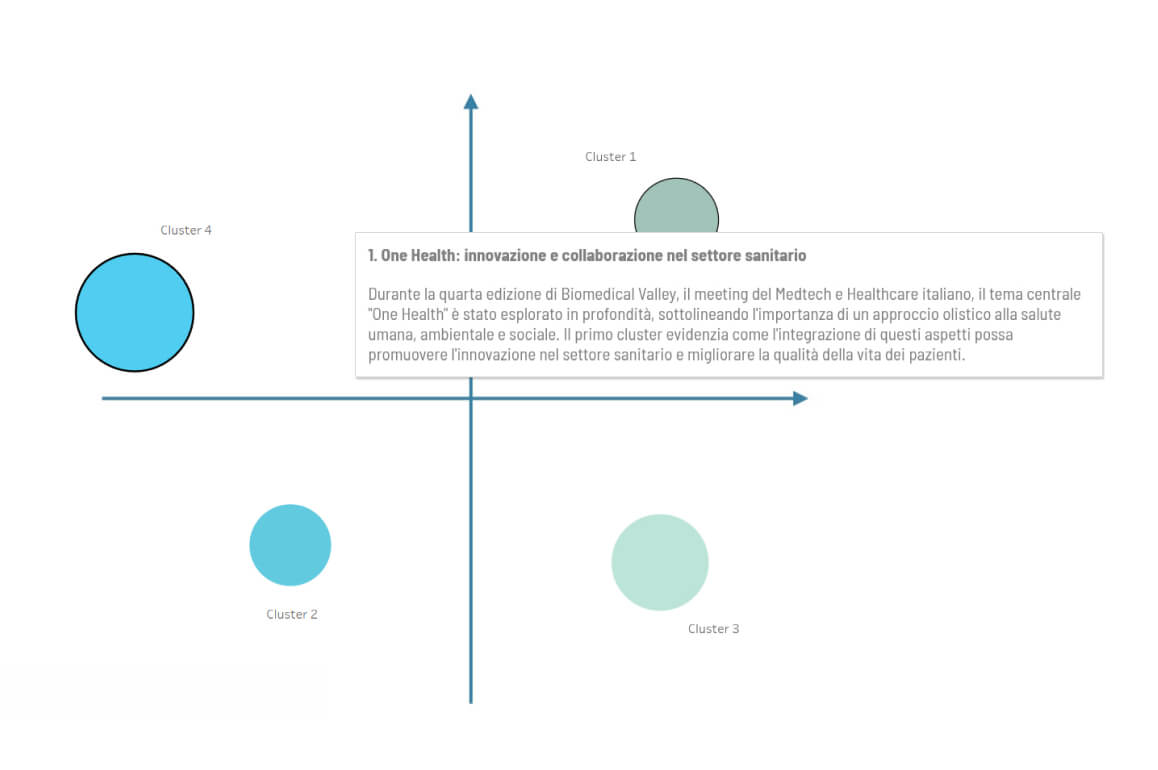
By calculating word associations, statistical natural language analysis identified the main topics discussed during the day (organised into four thematic clusters). The process of extracting the key themes, supported by interactive graphs, highlighted the most relevant concepts and dominant trends in the context, facilitating the understanding and interpretation of the collected linguistic data.
The project marks a step towards a future in which communication will be enhanced by AI technologies, providing a platform for data analysis and visualisation.
To develop your app
How it all started
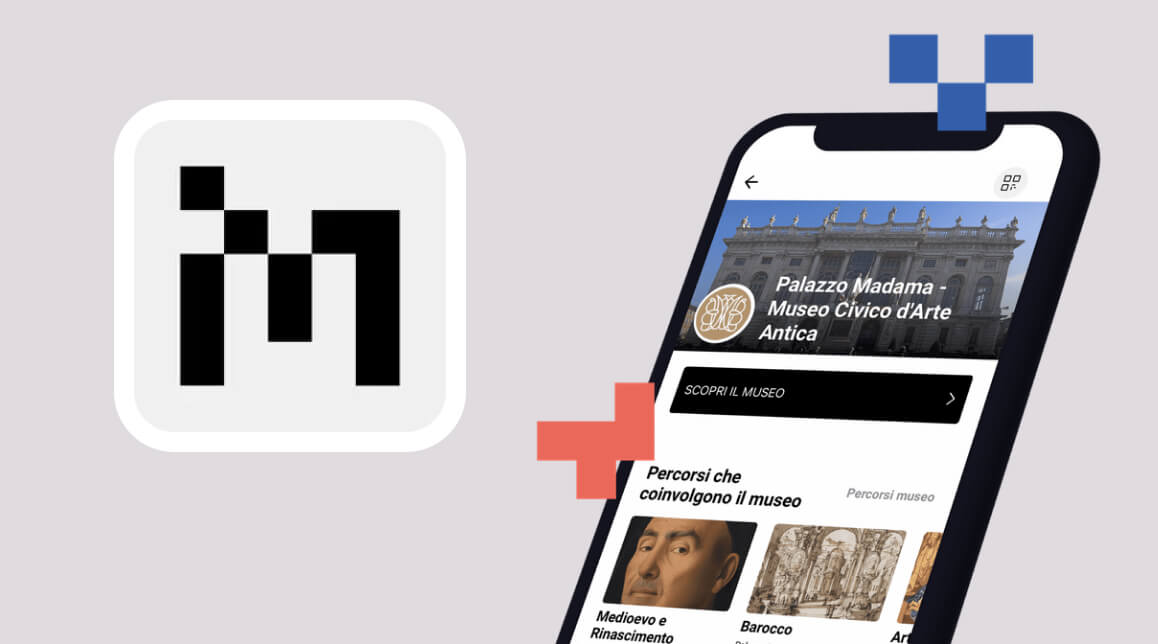
I-Muse project was born from a collaboration between the University of Turin and the Polytechnic University of Turin, supported by the Compagnia di San Paolo Foundation under the first edition of the “Artificial Intelligence” funding program.
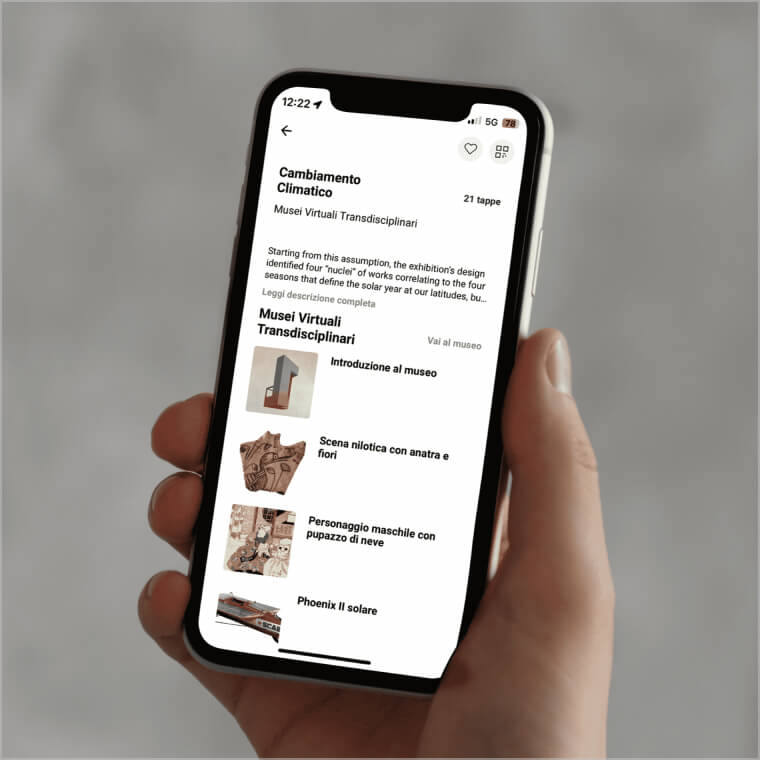
The mobile app, developed by Synesthesia, was created with the aim of revolutionising the visitor experience at eight of Turin’s most important museums: Reggia di Venaria Reale, Museo Egizio – Turin, Palazzo Madama, GAM – Civic Gallery of Modern and Contemporary Art, MAO – Museum of Oriental Art, National Cinema museum, National Automobile Museum, and Pinacoteca Giovanni e Marella Agnelli.
The solution
Synesthesia developed the mobile app‘s front end (available for iOS and Android) and its back end/office.
Artificial Intelligence (CoreAI), developed by the University of Turin and the Polytechnic University of Turin, plays a crucial role by creating an ideal itinerary for visitors. It selects and matches artworks based on preferences chosen via tags. The app also enables museums to modify information about exhibits (history and images of the artworks) in real time, enhancing interaction with visitors.
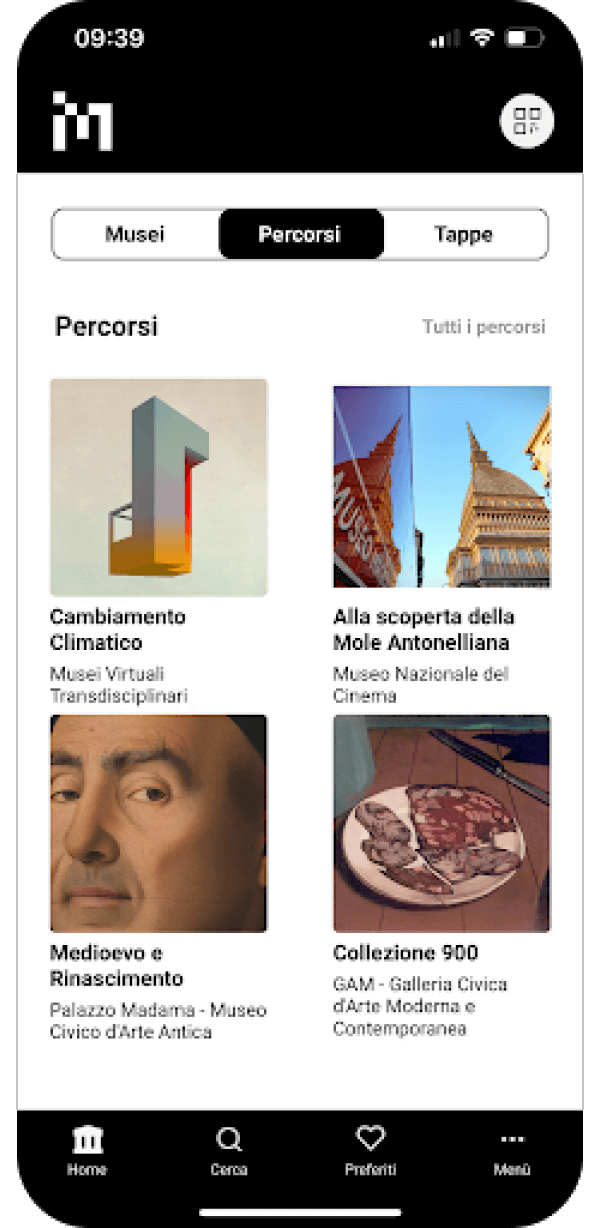
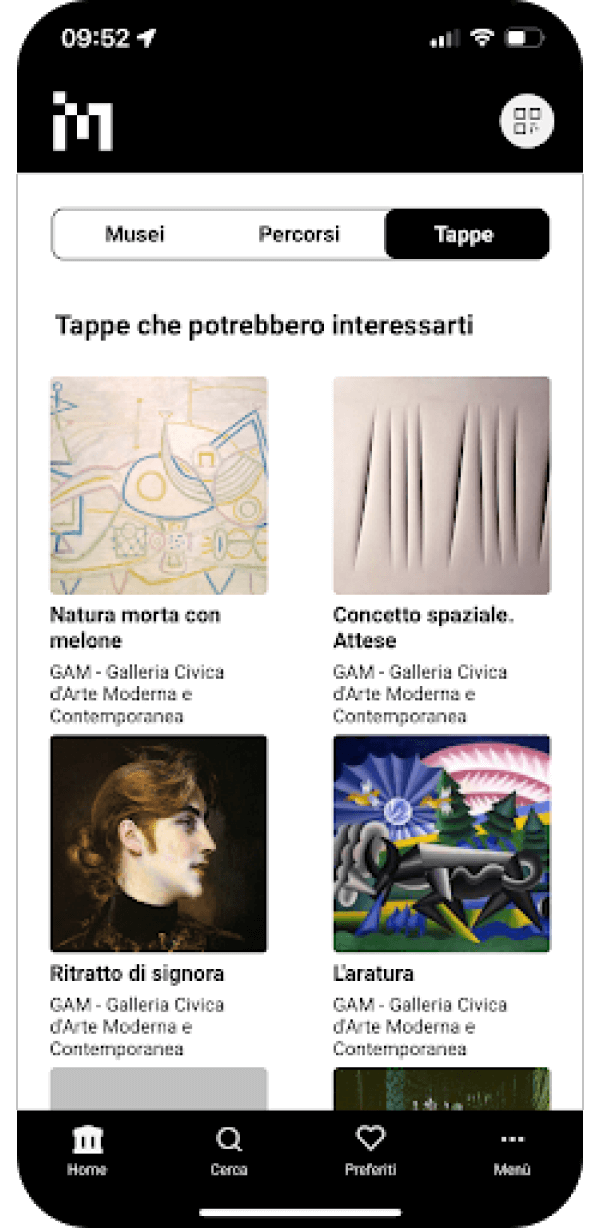
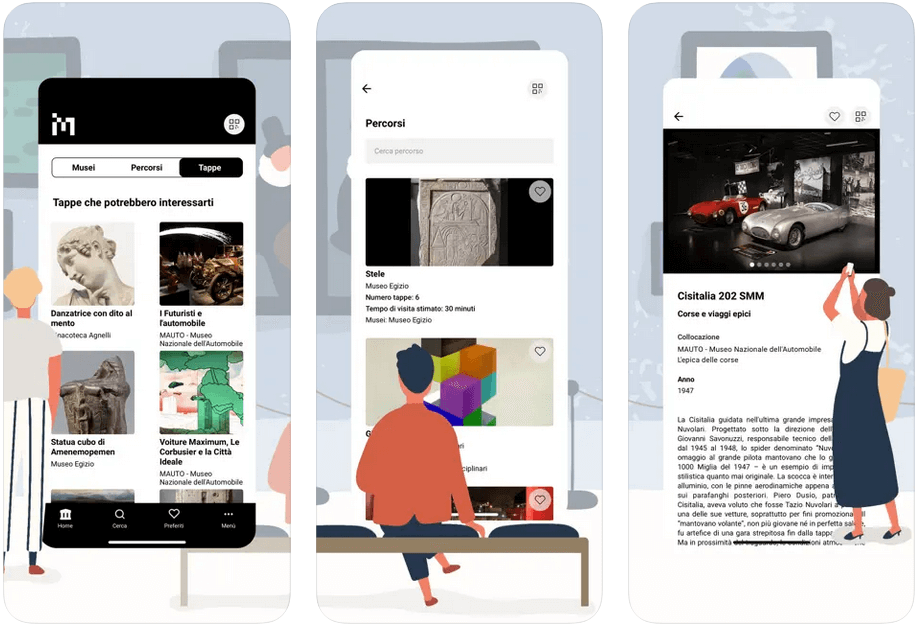
The app includes specific features across three main sections:
- “Museums” – allows the visitor to virtually explore the rooms and browse through all the exhibits. The function also allows the visitor to plan the visit by displaying previously chosen stops.
- “Routes” – the user chooses the museums, works or routes he or she prefers. Two types of routes are available: an intra-museum route (involving works from a single museum) and an inter-museum route (with works from several museums). Their management is regulated by DatoCMS, which allows the museum curator to have autonomy in editing their own content
- “Stops” – Visitors can directly access artworks suggested by the app based on their interests.
I-Muse, developed with React Native, provides visitors access to information about exhibited artworks and routes through secure and anonymous interaction with sensors (iBeacons) present in museums. This solution enables effective analysis of how visitors engage with certain points of interest, allowing museums to improve their offerings accordingly. I-Muse is built on cloud and serverless technologies (AWS) to support the growing number of app users and coordinate all the data coming from the sensors and artificial intelligence algorithms.
The app features two key AI algorithms:
- CoreAI – Offers personalized information on artworks and museum routes;
- V-Predict – Predicts museum attendance based on historical data.
In addition, DatoCMS was used, allowing us to create text and multimedia content dynamically through modular blocks and customisable components. This data is then displayed within the apps, always up-to-date.
The DatoCMS API is able to deliver content via a content distribution network, whose datacentres are located all over the world. When a page request is made, the content is delivered to the user from the nearest server, making the response fast and with low latency.
The app interacts with Dropper.ai sensors (a dashboard showing real-time museum visits, dwell times and routes taken by visitors) and iBeacons (sensors that hook up to the phone’s Bluetooth and interact with the app providing useful information to the user approaching the work) positioned at key points in the museums in order to obtain valuable information on visitor flows and enables future predictions.
Finally, I-Muse includes the gaming function developed by the company Garycom, which allows visitors to play with the collections present using 7 different video games. The interactive experience is definitely immersive.
Results
As Vincenzo Mollisi (Postdoctoral researcher at the University of Turin and project contact person) argues:
“The project originated from a call for proposals funded by the Compagnia di San Paolo Foundation and aims to introduce artificial intelligence into museums. We are university researchers with an academic and not an entrepreneurial background: we had expertise in prediction and algorithms, but not in app creation. Synesthesia helped us by providing support in the development, contributing decisively to the completion of the project”.
Nadia Campaniello (Associate Professor of Economics at the University of Turin and Project Contact Person):
“We won the first edition of the Compagnia di San Paolo Foundation’s call for proposals on Artificial Intelligence in the ‘culture’ sector. Our project involved four departments: two from the Politecnico, the Department of Automation and Informatics and the Department of Architecture and Design, and two from the University of Turin, the Department of Economic-Social Sciences and Mathematics and the Department of Management. This is a very ambitious project involving eight museums, which together account for approximately 64% of visitors to the Turin area. Four associations also participated, including the Associazione Abbonamento Musei, the Osservatorio Culturale del Piemonte and the Big Data Analysis Lab of the City of Turin. One of the components of the project is the I-Muse app, developed in synergy with Synesthesia. We relied on Synesthesia because it is a growing company that also has many other museum-related projects. They will continue to support us in perfecting the app, and we hope that other collaborations will emerge in the future”.


To develop your project
How it all started
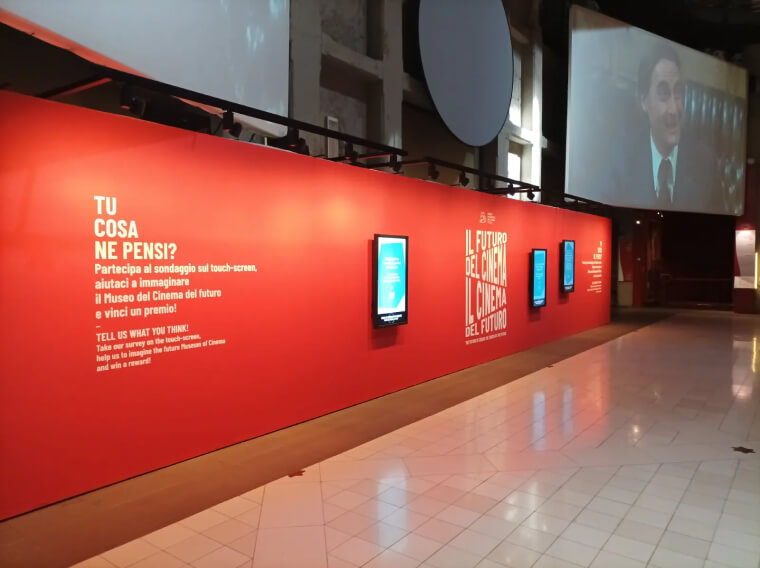
The history of cinema has been marked by significant changes and transformations, from the advent of sound films to the transition from black-and-white to color, from film reels to digital formats, and now streaming. But to what extent have these innovations influenced cinematic language? The National Museum of Cinema in Turin explored this question with a new exhibition titled “The Future of Cinema, the Cinema of the Future” hosted until September 7, 2023.
As Domenico De Gaetano, Director of the National Museum of Cinema, explained during the exhibition’s press presentation:
“The goal of this exhibition? To engage as much as possible with the Museum’s audience to better understand their expectations for the future”.
To achieve this, the Museum collaborated with Synesthesia to create an original project. At the top of the ramp winding around the walls of the Aula del Tempio in the Mole Antonelliana, visitors had the unique opportunity to co-write a cinematic script with Artificial Intelligence.
The solution
During the development phase, Synesthesia’s Technologies team integrated two AI services: one from OpenAI to generate the cinematic plot and another using Stable Diffusion to create the movie poster.
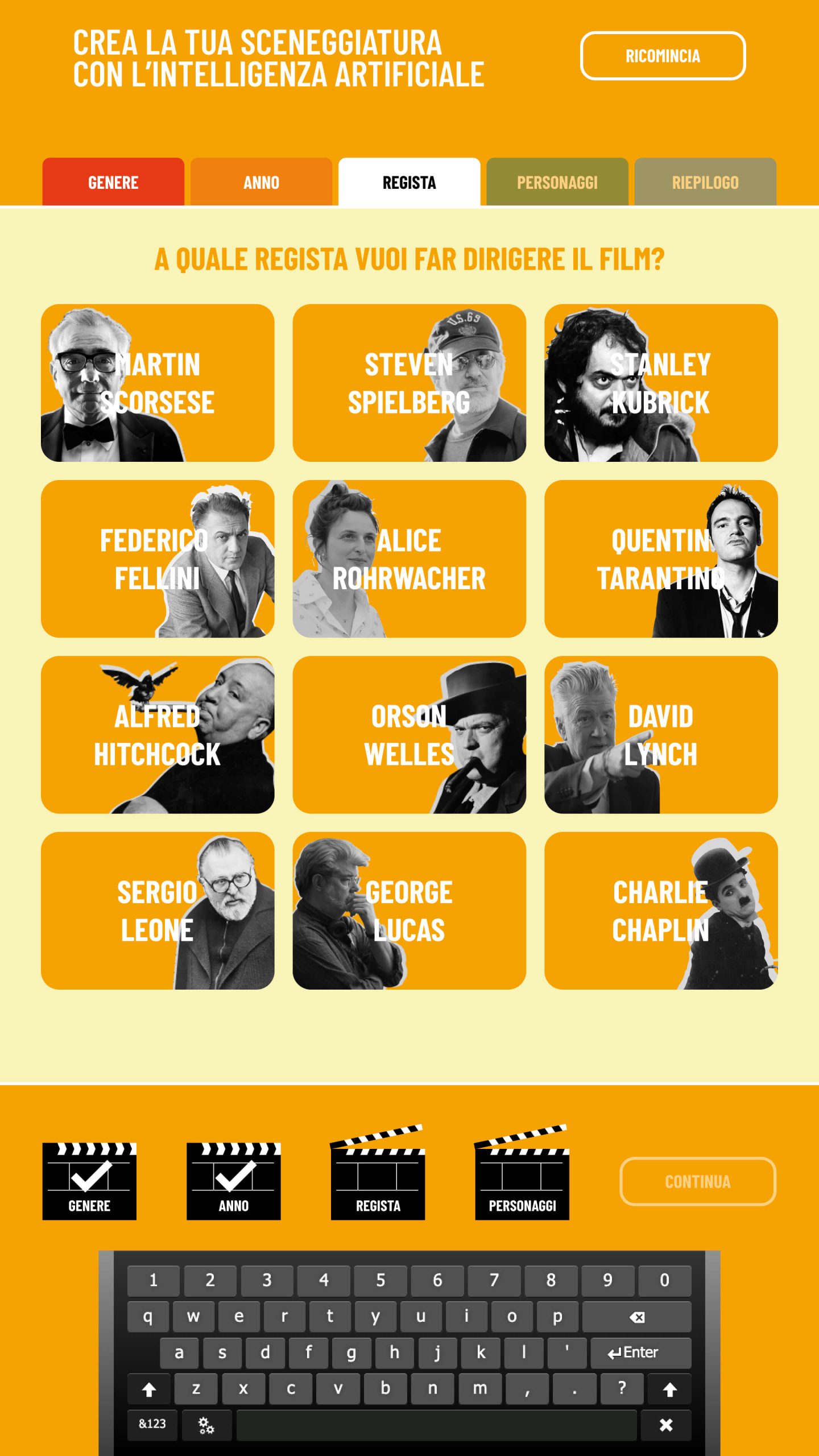
The solution enables visitors to use a large wall-mounted touchscreen to craft a 3,000-character plot set in the Mole Antonelliana, complete with a custom poster. Visitors begin by selecting the director, characters, and genre.
At the end of the experience, users receive their content via email and answer two simple questions: one about their perception of authorship (whether they feel they are the true author of the generated content) and another on whether the result met their expectations.
Results
The interactive experience proved to be highly engaging. As Fabrizio Dividi wrote in Corriere Torino:
“Thanks to the technology developed by Synesthesia, every visitor can generate a cinematic plot in just a few minutes, starting with the choice of the director (Tarantino seems to be the most popular), the protagonists, and the genre. The only rule is ‘unity of place,’ which in this case is the Mole Antonelliana. The result? A mix of wonder and amusement”.
Read Andrea Giordano’s article on Wired | Read Luca Indemini’s article on Italian Tech.
To develop your project
How it all started
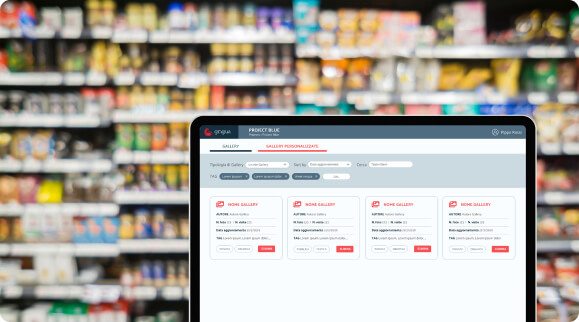
Hunter App by Grigua is an app dedicated to the retail world. The sector has been changing over the years: automation is increasing and more and more companies are moving towards new models of management for their stores. People are working in much more connected and optimized ecosystems.
The goal is to easily organize information from different sources according to a single common level of access: the point of sale.
The activity is part of the set of initiatives conducted for the partner Grigua.
Sales Tools AI
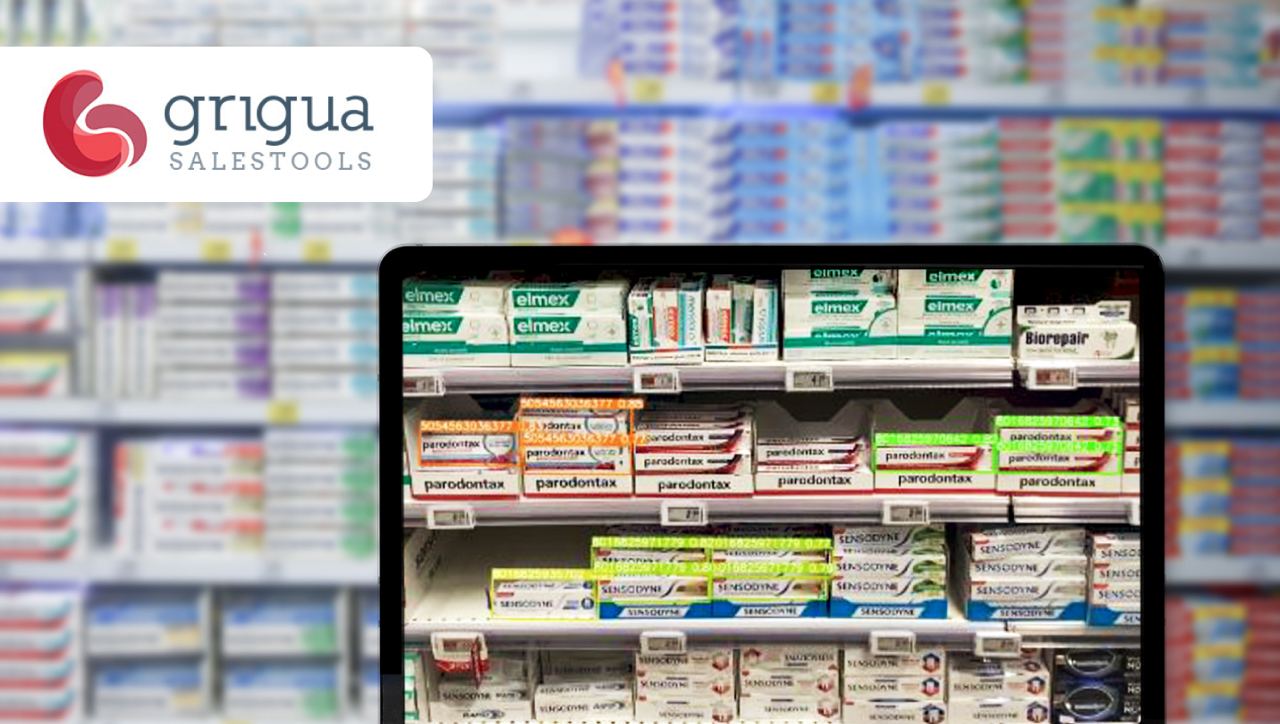
To provide effective and more informed support to sales networks, Grigua and Synesthesia launched the ‘Sales Tools AI‘ project in recent months, an innovative solution based on artificial intelligence and computer vision.
The Synesthesia AI team developed an artificial intelligence-based system that automates all shelf management operations in Mass Market and Pharma shops.
The developed solution provides a complete view of the data and its trend in real time. The benefits for users of the platform are several, but can be briefly listed as follows:
- Reduced tracking time;
- Reduction of errors;
- Increased point-of-sale profit.