To develop your project
How it all started
Following the success of the web game “Pandemia – Scrivi la tua storia”, Synesthesia’s Technologies team was once again engaged by Fondazione Veronesi for the development of the project “Smogville – Fino all’ultimo respiro” (Smogville – Until the Last Breath).
Smogville – Fino all’ultimo respiro is a graphic adventure created by Fondazione Veronesi to highlight the risks associated with air pollutants.
According to the World Health Organization, air pollution is the “greatest environmental health risk”: every year in Europe, there are 400,000 premature deaths linked to air pollutants, with 80,000 occurring in Italy alone.
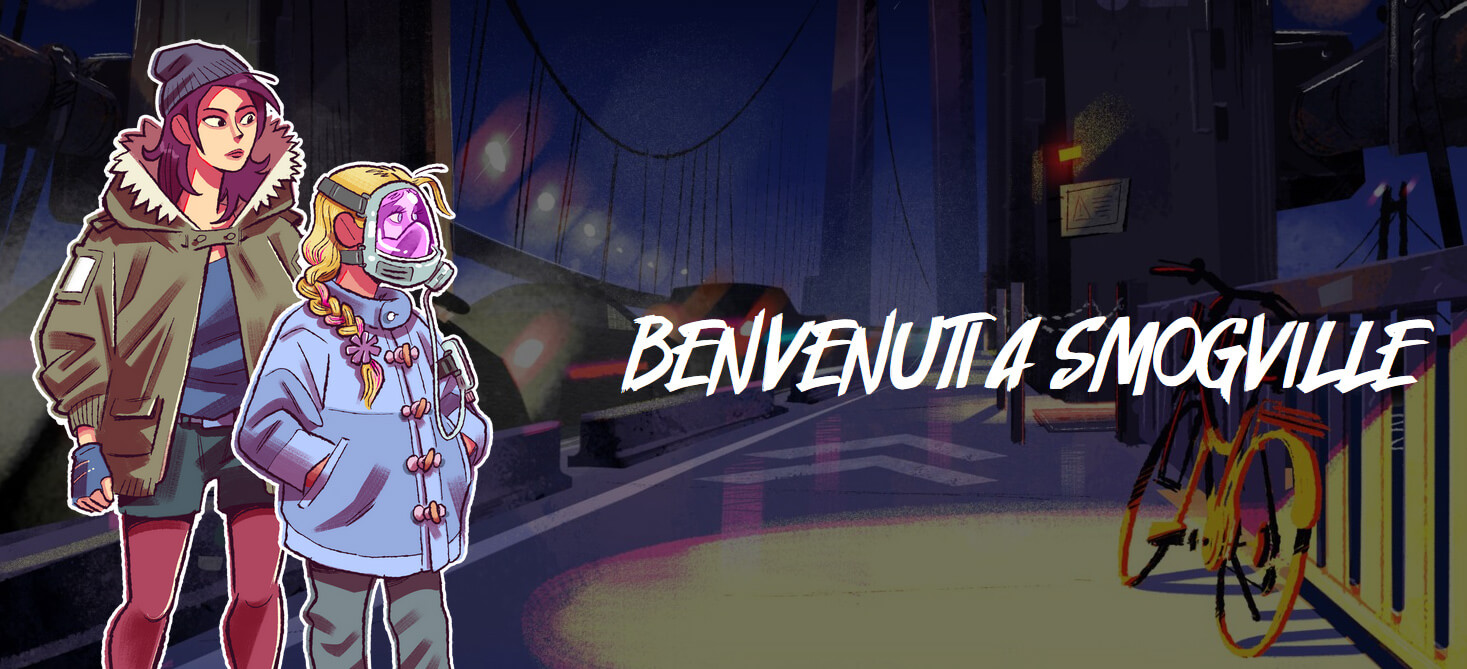
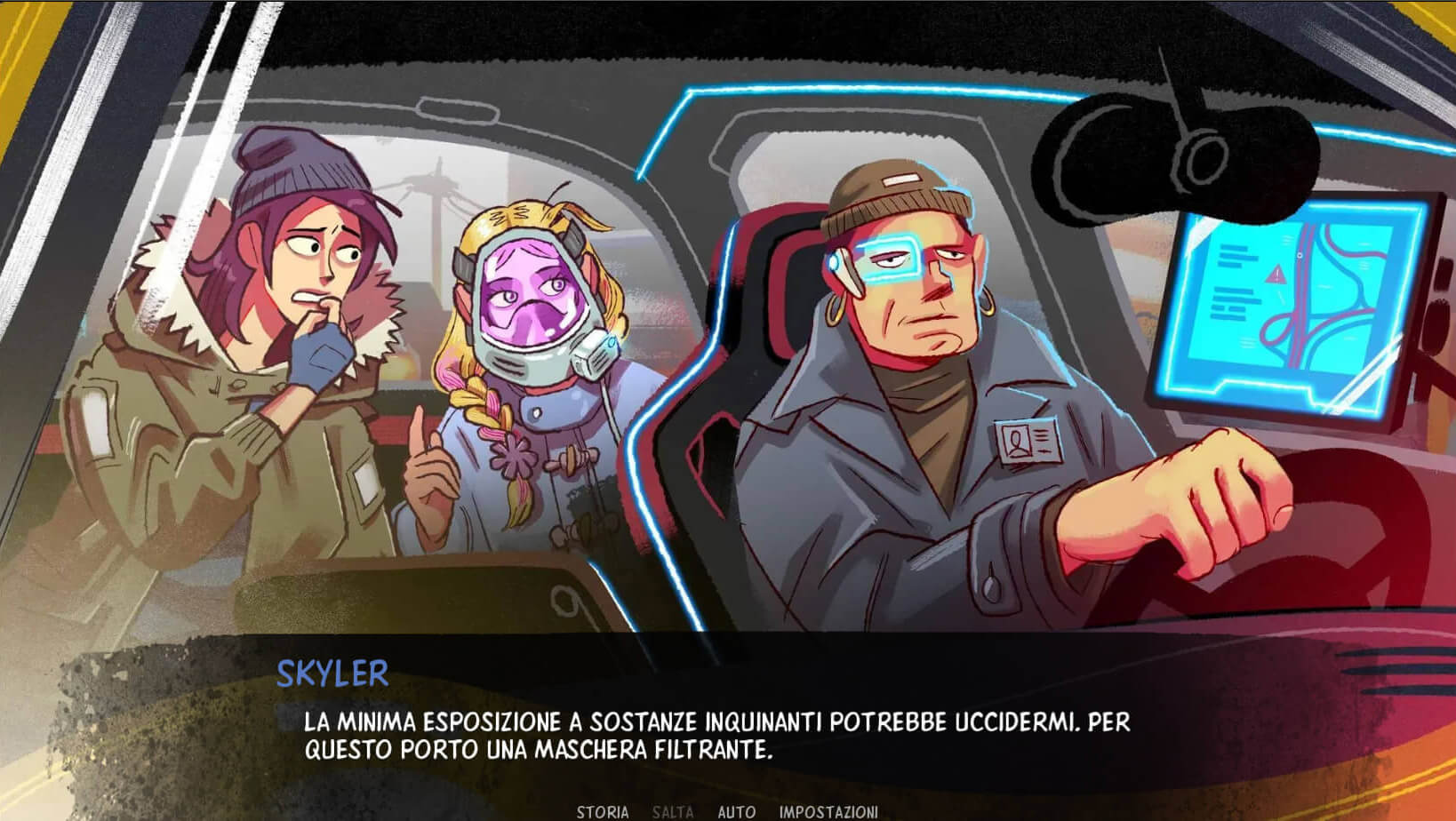
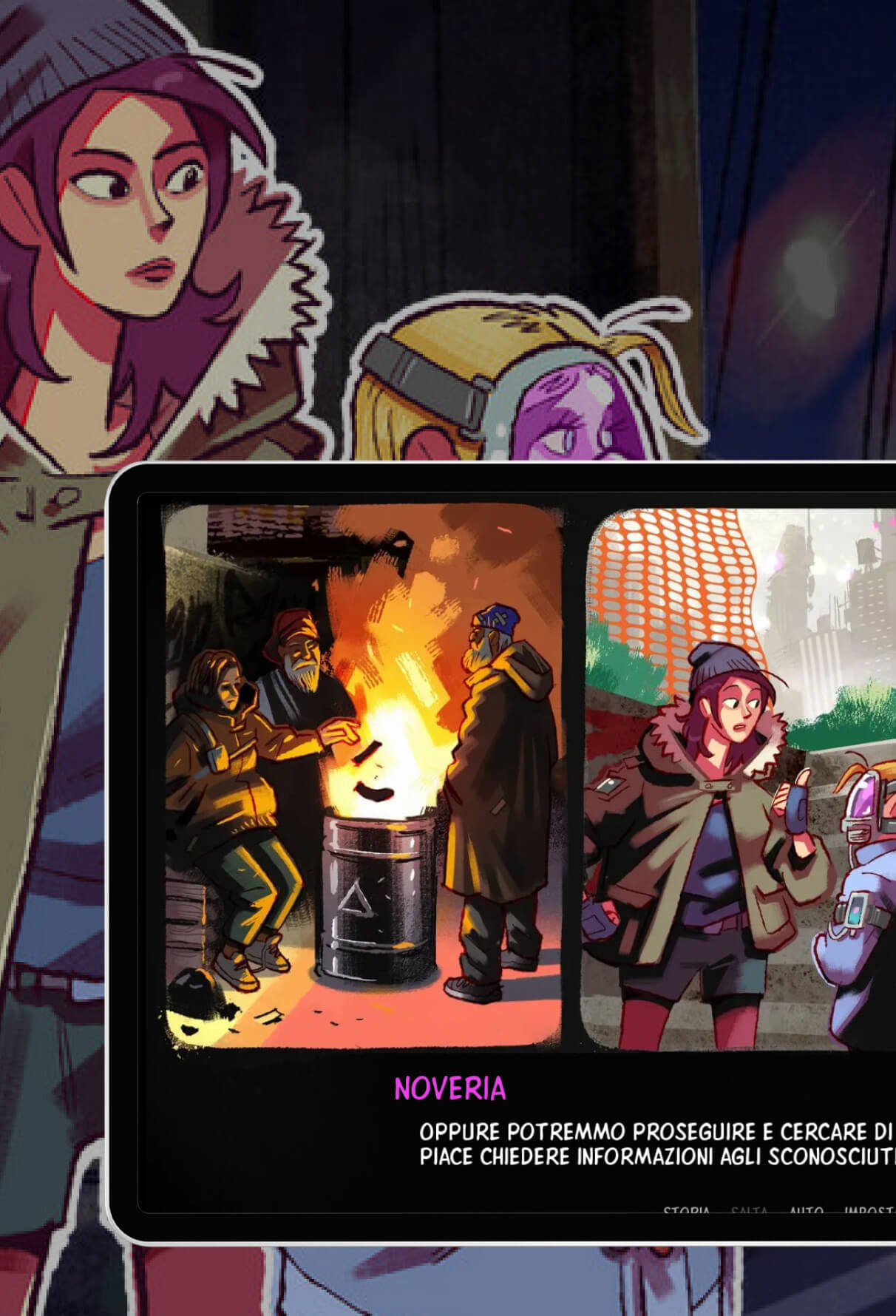
The goal of Smogville – Fino all’ultimo respiro is to raise awareness of air pollutants and their effects on human health. The graphic adventure is designed to uncover the main sources of air pollution, both indoors and outdoors. Set in a futuristic city called Smogville, the web game targets students aged 11 and up. Players can explore various urban environments and navigate through the city, with the choices they make determining the fate of the two protagonists—Skyler and Noveria.
The solution
Synesthesia’s Technologies, in collaboration with Fondazione Veronesi’s team, focused on:
- Defining the game design
- Developing the game
- Creating a dedicated website
For the development of the web game, the Ren’Py engine was used, which is ideal for creating Visual Novel Games. The game is accessible on both desktop and mobile platforms, allowing users to immerse themselves in the Smogville environment through engaging audio effects, graphic animations, and detailed illustrations.
At the end of the game, the system provides an “adventure score” based on how risky the player’s decisions were—reflecting their exposure to air pollution risks.
The project involved multiple partners: Fondazione Veronesi, in collaboration with Symmaceo Communications, developed the story, script, character design, maps, and illustrations. Game design was handled by Luca Gambadoro and Marco Mazzaglia.
Results
“Smogville was integrated into the “Tutti per aria!” project, an educational initiative by Fondazione CRT, conceived and developed by Fondazione Veronesi. The program featured workshops addressing air pollution and the importance of protecting both oneself and the environment. From March to April 2023, over 2,100 middle school students from Piedmont and Valle d’Aosta participated in these workshops, with Smogville serving as the centerpiece of the educational offering. Starting in the 2023-24 school year, the program will expand across Italy. We strongly believe in video games as an innovative tool for informal education in schools. We used it to create an engaging and challenging story while ensuring the scientific message and its accuracy remained intact. It’s crucial for us to promote projects focused on health education, especially when the topic—air pollution—affects us all so closely. The Synesthesia team helped us transform an idea into a complete game; it was an incredibly stimulating project!”.
Alessandro Vitale (Scientific Supervisor, Fondazione Veronesi)
To develop your app
How it all started
Word Ladders is a linguistic game that is part of the five-year research project “Abstraction“
(GRANT AGREEMENT: ERC-2021-STG-101039777)
Funded by the European Research Council (ERC) and developed by the research group at the University of Bologna (UniBO), the game aims to collect and study linguistic data on word associations (in Italian and English) to better understand the structure of the users’ mental lexicon in relation to age, reading habits, and professions.
Synesthesia’s Technologies team was involved in the project to carry out the refactoring of the Word Ladders app, restructuring the code to make it more efficient and easier to maintain.
The solution
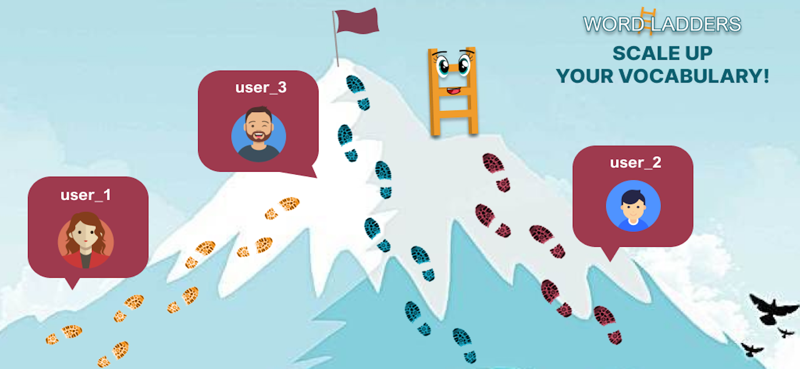
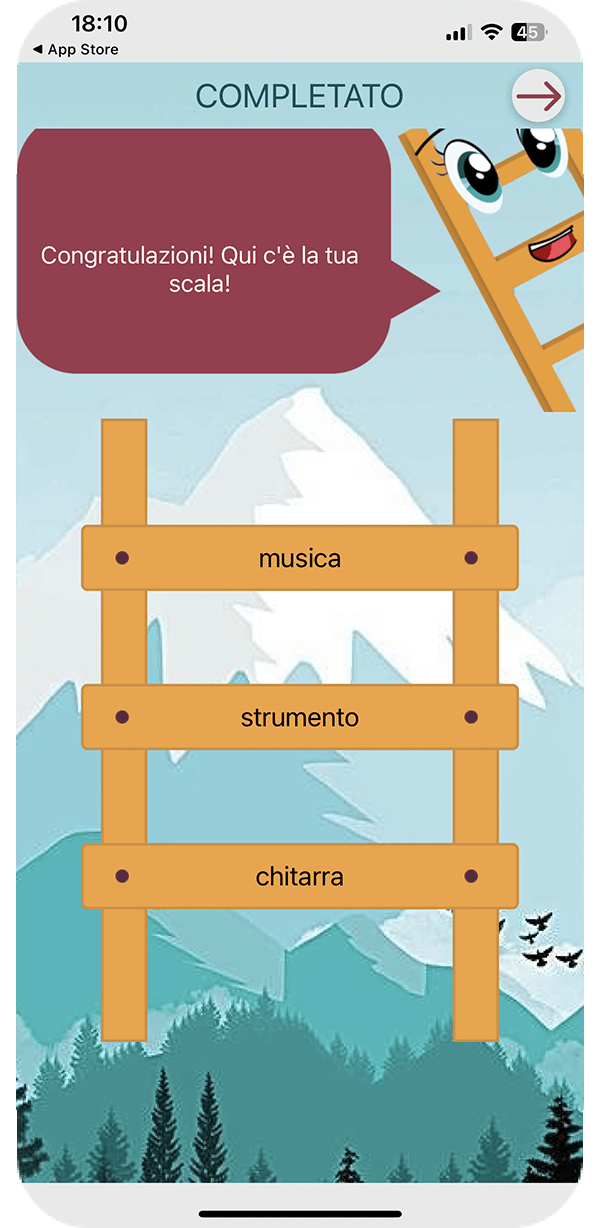
Word Ladders is a game that allows players to test their vocabulary and attempt to create the longest possible “ladder” by adding words to each rung. However, not all words earn points. Players start by adding increasingly generic words above the given word (e.g., apple → fruit → food). The longer the ladder, the more points are scored.
The development of Word Ladders involved active collaboration with the client, who fully managed the data analysis phase and word algorithm. In addition to the refactoring activities, Synesthesia’s Technologies team worked on implementing the following features:
- statistics section with scores related to game activity.
- real-time updated leaderboard section (with search filter options).
- badges section with goals that players can achieve based on their performance.
- tutorial section detailing all the features and various game modes.
- information section about the initiative.
Synesthesia’s development activities were carried out using the following technologies: React Native for the front end and Node.JS for the back end.
For further information on the scientific objectives behind the creation of the game, the privacy policy, and other app documentation, please visit the academic project’s website.
Results
“The collaboration between Synesthesia and our research group at the University of Bologna has brought Word Ladders to life, a mobile app that is not only a linguistic game but also contributes to research on linguistic thought and improves the language skills of players in both Italian and English. Synesthesia’s professionalism was reflected in their cohesive, young, and dynamic team, who tackled every stage of the project with commitment, proactivity, and, above all, calmness in handling challenges. We appreciated the genuine interest shown by Synesthesia’s members in the scientific challenges that inspired this app, an interest that made us feel understood and supported. This partnership represents an excellent example of synergy between the academic and industrial worlds, inspiring innovation and scientific progress”.
Marianna Marcella Bolognesi (Coordinator of the Abstraction project under which Word Ladders was developed, and Associate Professor, Department of Languages, Literatures, and Modern Cultures at the University of Bologna).


To develop your game

How it all started
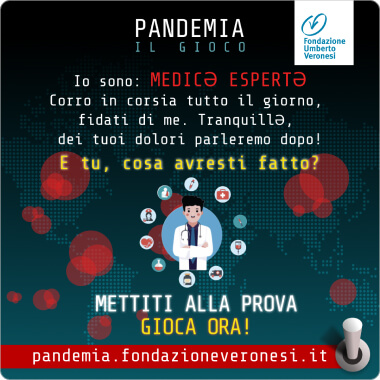
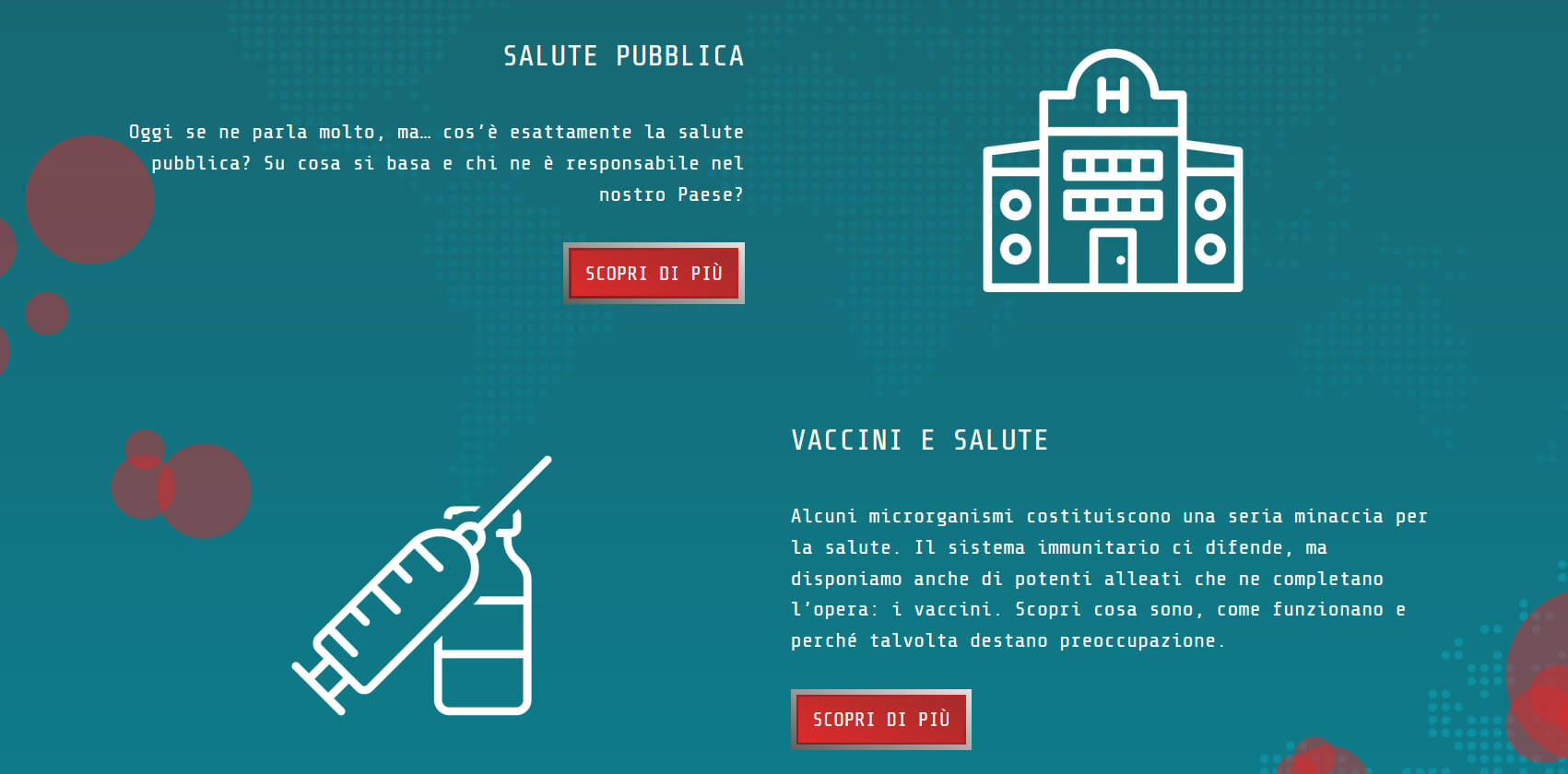
“Pandemia – Scrivi la tua storia” is a web game (usable from desktop, tablet and smartphone) developed by Synesthesia for students aged from 11 years. It is part of a path of awareness and scientific dissemination designed and promoted by Fondazione Umberto Veronesi as a part of its broader commitment to young people to explore the issues of public health, infectious diseases and vaccines.
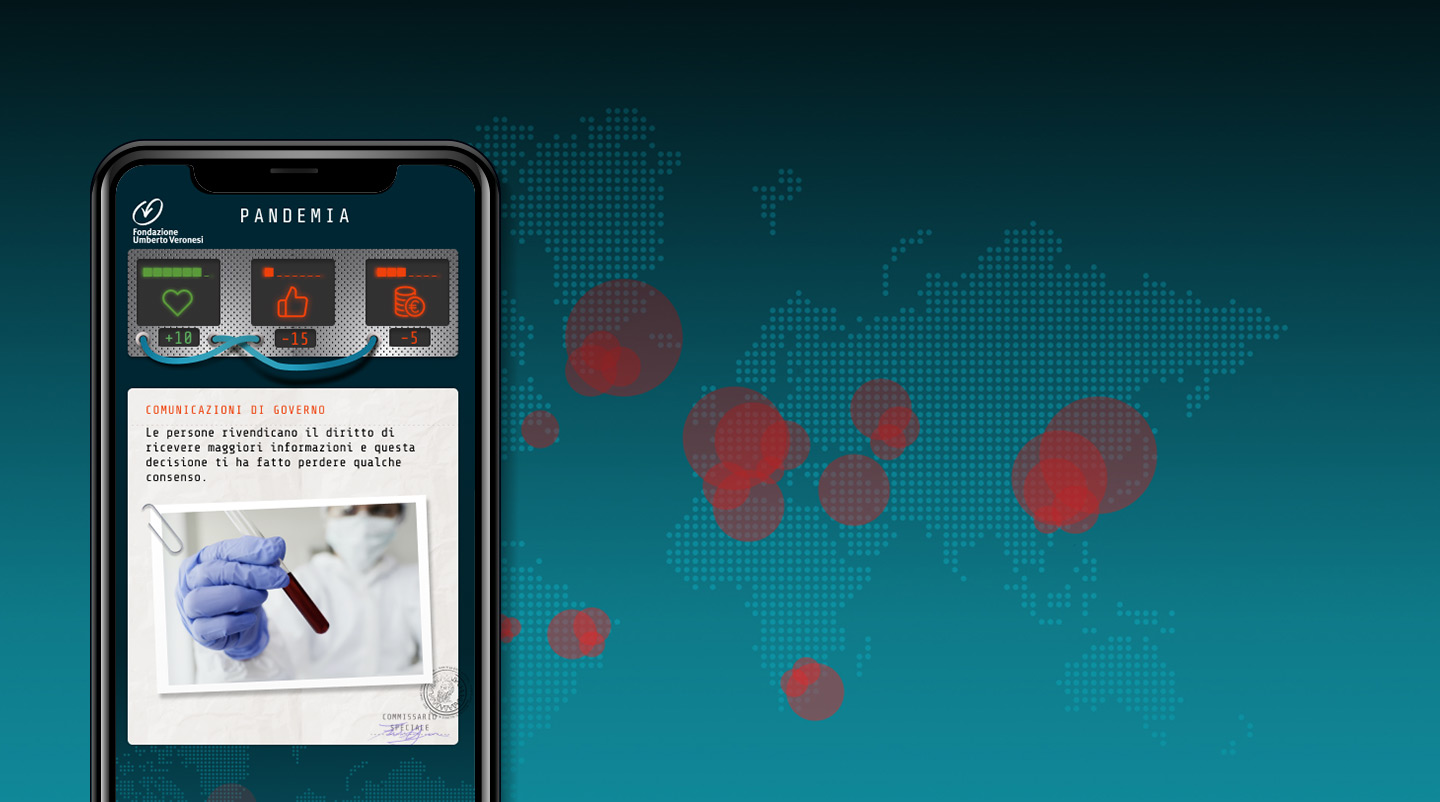
Through a digital simulation, the youngsters have to take on the role of policy-makers. The mission is to manage a new unknown infection, delving into the dynamics of an epidemic and the fundamental aspects of preserving everyone’s health.
Once the game is over a score is established that measures the effectiveness of the choices taken.
The solution
“Pandemia – Scrivi la tua storia” was fully developed by Synesthesia. The game was designed to meet specific needs: for instance, it can be completed in a limited time and is part of a broader educational journey.colato.
Creation and development process involved a team comprising a creative director, a project manager, a developer, a graphic designer, and a game designer. The game’s architecture is complex: each scenario challenges the player to think in different ways.
Throughout the game, players can make different choices based on the events presented.
Results
“Pandemia – Scrivi la tua storia” is part of an educational program by the Umberto Veronesi Foundation (the “Io Vivo Sano – Public Health and Epidemics” workshop), with digital workshops organized in May 2021 in schools across Italy. Approximately 3,000 students, 100 teachers, and more than 70 schools participated. At the end of the activities, around 500 online feedback questionnaires were collected. The results exceeded expectations in terms of both engagement and visibility.
As a result, a further development of the project was decided to improve certain aspects and add new features. The 2.0 version of the game was launched on October 6, 2021.